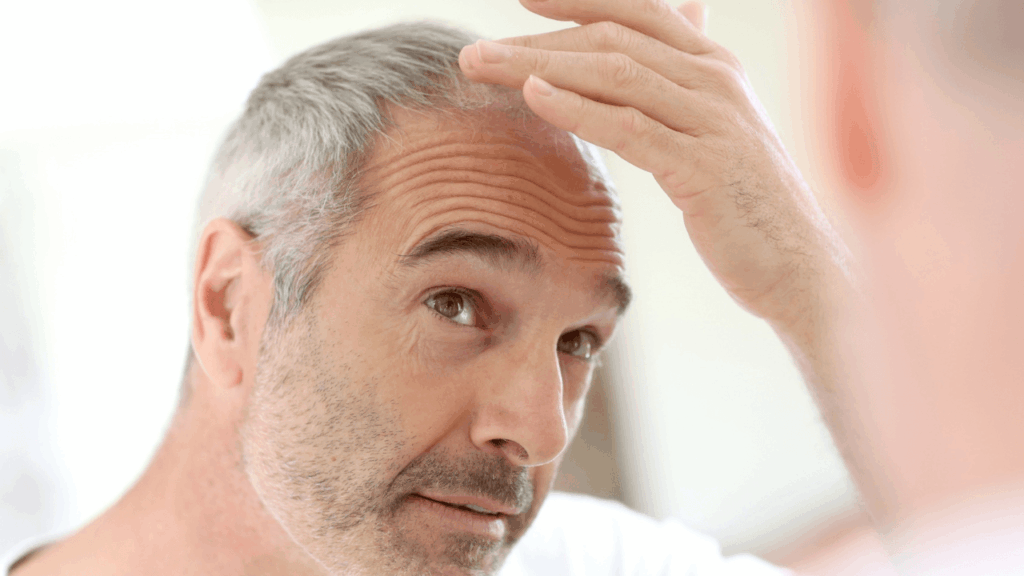
Hair loss is a concern for many people. Male pattern hair loss is common and increases with age. The American Academy of Dermatology reports that more than half of men have a visible sign of hair loss by age 50. More than 50% of women experience noticeable hair loss at some point in their lives. Grand View Research estimates that Americans spent over $1.53 billion for hair-growth pharmaceuticals, supplements, and devices in 2024 alone.
It is not uncommon for patients to ask me what non-surgical approaches they can take to prevent or lessen the effects of hair loss. There are lifestyle changes that one can make to reduce the risk of hair loss, such as:
- Controlling blood pressure
- Weight loss
- Not smoking
- Avoiding grooming practices that damage hair
Personally, I think that stem cell therapy holds the key to correcting hair loss. I am optimistic that within the next several years, there will be new, exciting treatments available to deal with this perplexing problem for so many men and women. However, at this time, non-surgical therapies appear to be confined to nutritional supplements, topical agents, oral medications (such as minoxidil (Rogaine)), and various light therapies. While some people have a moderate success with these treatments, it has been my experience that most people have results that are less than their expectations. In the past we’ve talked about: light therapy (photo bio modulation), haircare practices, products to avoid, and both topical and oral medications. Today, we would like to focus on nutritional supplements, or what are commonly referred to as “nutraceuticals”.
It has been my experience that specific nutritional supplements containing ingredients with antioxidative activity (tocotrienols, polyphenols, etc.), melatonin, sulforaphane and other NRF2 upregulation may be beneficial. These agents are present in commercially available OTC hair products, but availability and supporting evidence vary considerably.
1) Tocotrienols and Antioxidant/Polyphenol Supplements
The main direct tocotrienol evidence is a small randomized, placebo-controlled study involving 38 people with hair loss. After eight months, hair count increased in the tocotrienol group, although hair weight did not change. This is promising but insufficient to establish tocotrienols as a treatment equivalent to minoxidil or prescription therapy.
Apple polyphenols, particularly procyanidin B2, also have limited human data. Small topical studies and non-placebo-controlled oral studies suggest possible improvement in hair count, diameter or keratin production, but different apple extracts are not interchangeable. The formulation studied cannot automatically validate every apple-polyphenol supplement.
2) Melatonin
Topical Melatonin
Topical melatonin is commercially available, although much less common than minoxidil. Several small studies of topical melatonin have reported reduced shedding or increased anagen hair in men and women with androgenetic alopecia. However, the studies were small, some were uncontrolled, and several evaluated proprietary solutions. The evidence is therefore suggestive, not definitive.
Oral Melatonin
Oral melatonin is readily available as a sleep supplement, but I would not classify it as a hair-growth supplement. There is no persuasive clinical evidence that swallowing melatonin improves androgenetic alopecia. Oral administration creates systemic exposure, with possible sedation, dizziness, headache and medication interactions. It should not be substituted for topical melatonin simply because both contain the same molecule.
3) Sulforaphane and NRF2 Upregulation
Sulforaphane is a potent experimental NRF2 activator, but its hair-loss evidence remains preclinical. A 2025 study found that sulforaphane-rich broccoli-sprout extract promoted hair regrowth in a testosterone-induced mouse model and increased expression of enzymes involved in DHT metabolism. The investigators explicitly concluded that human studies are still required. These are general wellness products, not validated alopecia therapies. I did not identify a credible mainstream U.S. hair supplement that provides quantified sulforaphane and has human hair-growth trial data.
Bottom Line
- Tocotrienols, curcumin and polyphenols are readily found in Nutrafol and several other premium hair nutraceuticals.
- Melatonin scalp serum is commercially available, but products should disclose concentration. The published signal is interesting, but remains below the evidence level for topical minoxidil.
- Sulforaphane/NRF2 activation has mechanistic and animal support, but no adequate human trial establishing treatment efficacy for androgenetic alopecia.
- Regulatory Limitation: Dietary supplements are not FDA-approved for safety or efficacy before marketing, so inclusion on a label does not establish hair-growth effectiveness.
Practical Conclusions
From a clinical product-selection standpoint, I would rank these as:
- Tocotrienol/Polyphenol Complexes: Reasonable adjunct, limited-to-moderate evidence.
- Topical Melatonin: Potentially useful adjunct, preliminary evidence.
- Sulforaphane/NRF2 Products: Investigational for hair loss.
Follow us on Facebook for more tips on health and wellness every week.
For information on procedures and wellness, visit our collection of free, downloadable eBooks
